
A bright, mild Sunday in February finally brought some proper sunshine to Gloucestershire, so I headed out into the back garden with the Nikon D850, the Tamron SP 90mm f/2.8 macro, and an LED ring light mounted on the front of the lens. Even a small garden transforms once you start looking at it through a macro setup: early flowers pushing through the soil, new foliage catching the light, and the occasional insect warming itself on a leaf. The D850’s high‑resolution full‑frame sensor gave me plenty of room to crop, while the 90mm focal length offered a comfortable working distance for both plants and insects. I worked entirely handheld, pairing the low February sun with the continuous ring light so that I could keep shutter speeds high enough to cope with the 12mph breeze without letting ISO drift too far from its base values.
Nikon D850 macro setup with LED ring light
The lighting strategy for the whole shoot was a balance between ambient and the ring light. At macro distances depth of field is extremely shallow, so I often wanted to stop down to somewhere between f/5.6 and f/11; without extra light, that would have forced me into either slow shutter speeds or very high ISO. The ring light, set to a moderate output, wrapped the subjects in soft, even illumination from the front, lifting shadows in the centres of flowers and under leaves while still allowing the sun to create direction and texture. By watching the histogram and adjusting the ring light’s brightness rather than simply increasing exposure, I avoided blowing out highlights on petals and reflective water droplets. The continuous nature of the light also made it easier to judge exactly how each change in angle affected the look of the image, something that is harder to do when you rely solely on flash.
Lupin leaf macro with water droplet
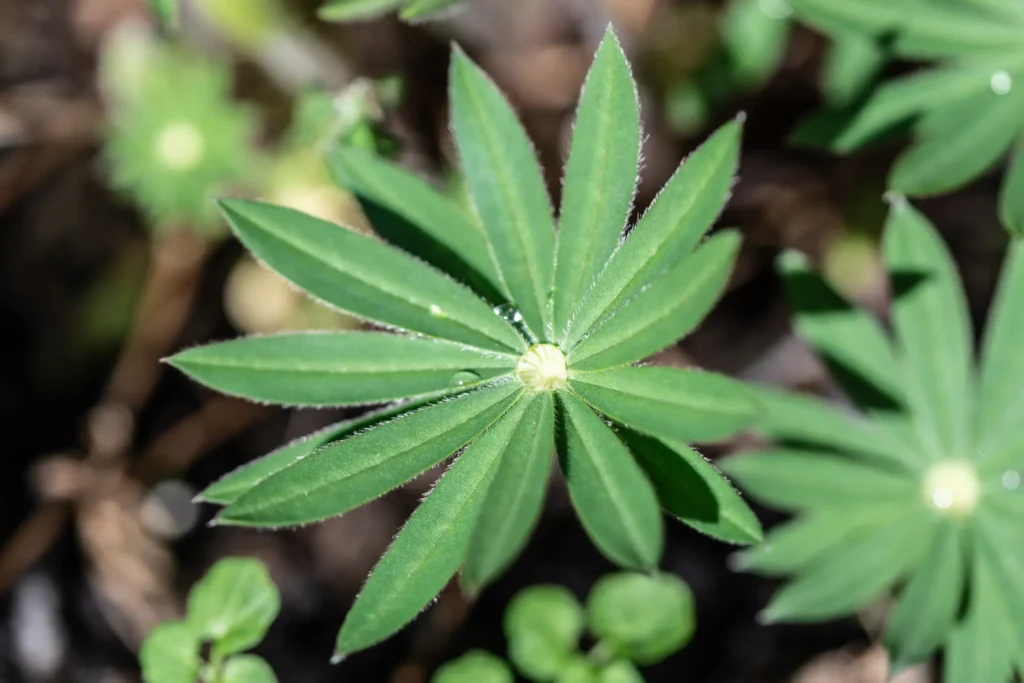
The first subject that really drew me in was a young lupin. Its leaflets radiated out from a pale central point like the spokes of a wheel, and overnight moisture had collected into a single bright droplet right at the centre. I positioned myself directly over the plant, letting the ring light sit just above the subject so its circular reflection became a subtle catchlight in the droplet rather than a harsh hotspot. With a mid‑range aperture, the combination of sun and ring light gave me enough shutter speed to freeze the leaf despite the wind, and the fine hairs along each leaflet edge caught the light beautifully. If you try something similar in your own garden, aim to balance your ring light so it fills shadows without overpowering the natural light; you want the droplet and leaf structure to sparkle, not look flat.
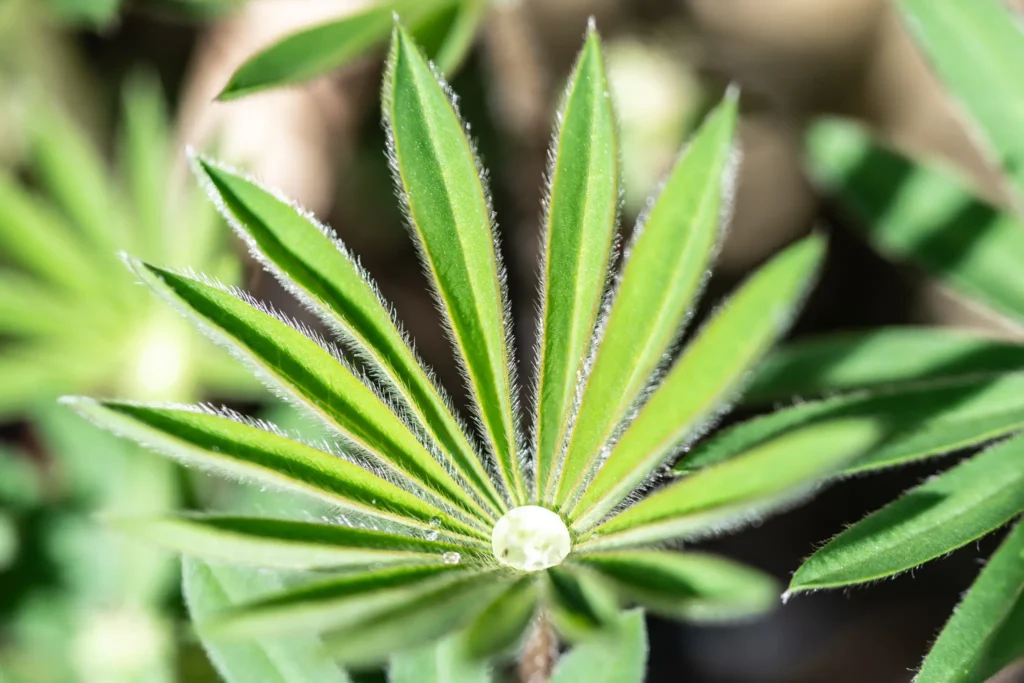
A slightly wider view of the same lupin offered a different kind of image. I stepped back and kept the overhead perspective but included multiple leaves rather than isolating just one. The ring light came into play here as a gentle front fill, ensuring the central node and the inner parts of the leaflets didn’t sink into shadow while the outer edges still picked up the side light from the sun. This blend of ambient and artificial light describes the plant’s geometry clearly and reveals the context of the border without losing contrast. When you explore your own garden, it is worth making both tight, graphic compositions and more environmental frames from the same subject, simply by changing your distance and how strongly you allow the ring light to influence the scene.
Saxifrage flower against a dark background
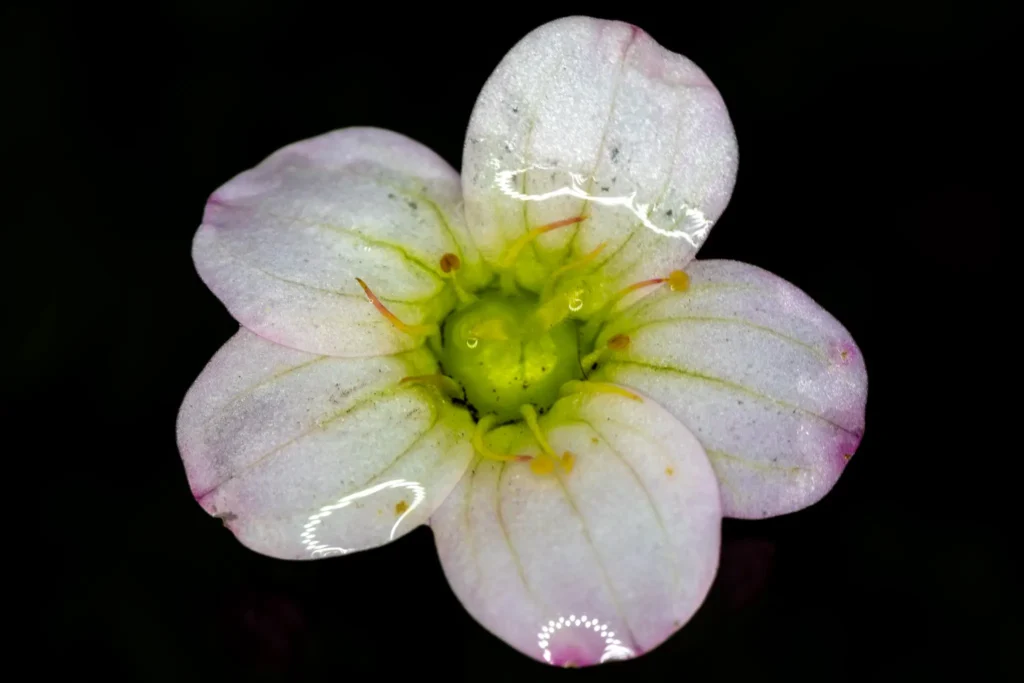
A few steps away, a small white saxifrage flower stood out against a patch of deep shade. I wanted it to float against a nearly black background, so I positioned myself so that the shaded area filled the frame behind the flower and then used the ring light as my main source, dialling it up to give the petals a delicate sheen. Because white petals can clip easily, I watched the highlights carefully and used a touch of negative exposure compensation, letting the ring light reveal surface texture while the background dropped almost to pure black. The droplets of water sitting on the petals caught a clean, circular reflection from the ring, which added a sense of depth without becoming distracting. In your own work you can exploit this by slightly angling the flower relative to the light: too perpendicular and the reflection dominates, but a small tilt breaks up the highlight and keeps the droplet believable.
Purple crocus macro with mixed lighting
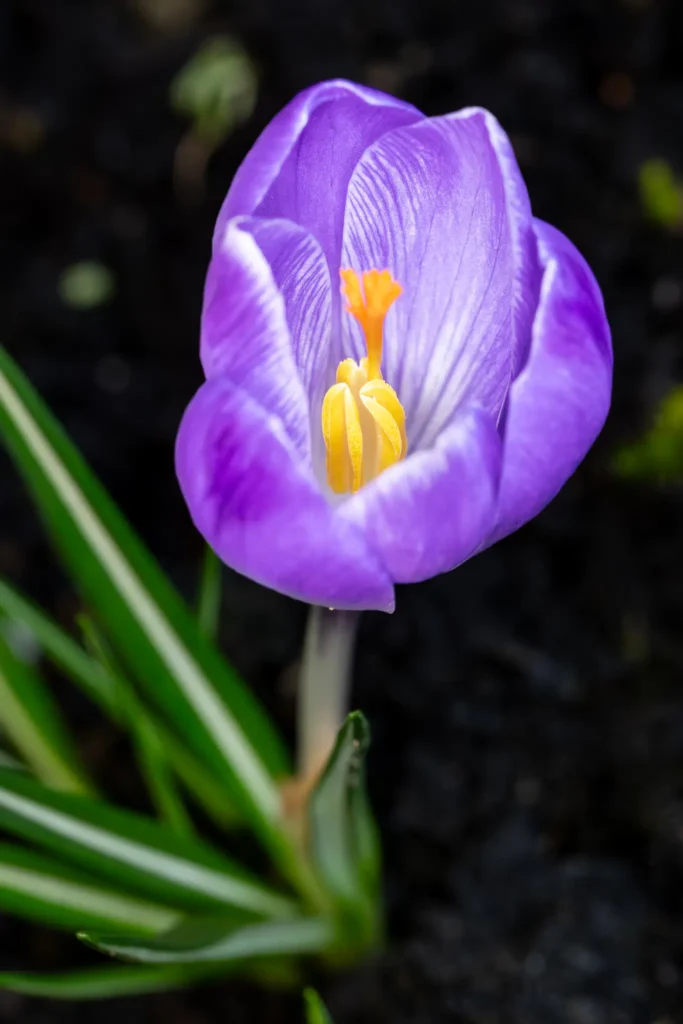
Moving along the border, flashes of purple between the dark clumps of soil signalled the first crocuses of the year. For the initial crocus image I treated the flower almost like a portrait, working in a vertical orientation from the plant’s level so it emerged from the blurred background of soil and foliage. Here the sun provided a gentle backlight while the ring light filled in the interior of the flower, making the orange stamens glow and preventing the inside of the petals from becoming too dark. I focused carefully on the front edge of the stamens and chose an aperture that kept them sharp while allowing the petals to soften gradually, aided by the smooth, shadow‑free illumination that the ring light gives when it is close to the subject.
Ladybird macro on textured leaf
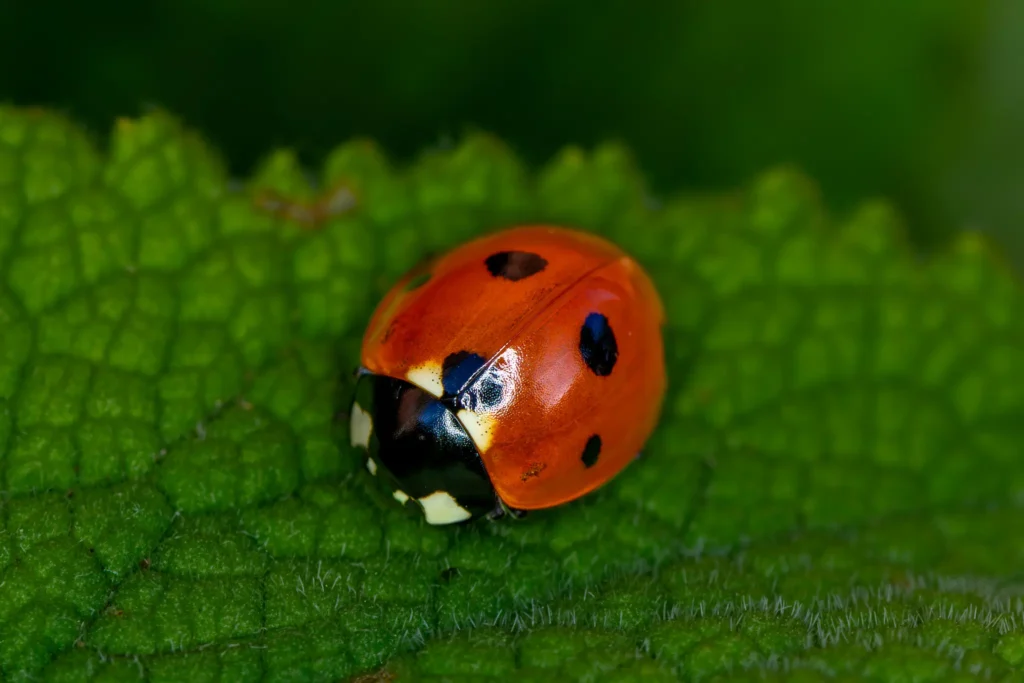
While following the crocuses I caught a glimpse of red on a nearby leaf: a ladybird had settled on the heavily textured surface to soak up the warmth. Photographing insects requires a slightly different rhythm. I approached slowly, keeping my movements deliberate and making sure the ring light did not suddenly flare in the insect’s field of view. Once in position I raised the shutter speed further and let the ring light do the heavy lifting, ensuring even illumination across the ladybird’s glossy shell and the leaf’s fine hairs. The ring light’s wraparound quality helped avoid harsh, directional shadows that can easily occur when you use a single off‑camera light on highly curved subjects. The contrast between the saturated red body and the rich green leaf is what makes the image work; when you encounter a similar scene, pay close attention to how your added light preserves that colour separation while still maintaining detail in both areas.
Creative crocus macro from a new angle
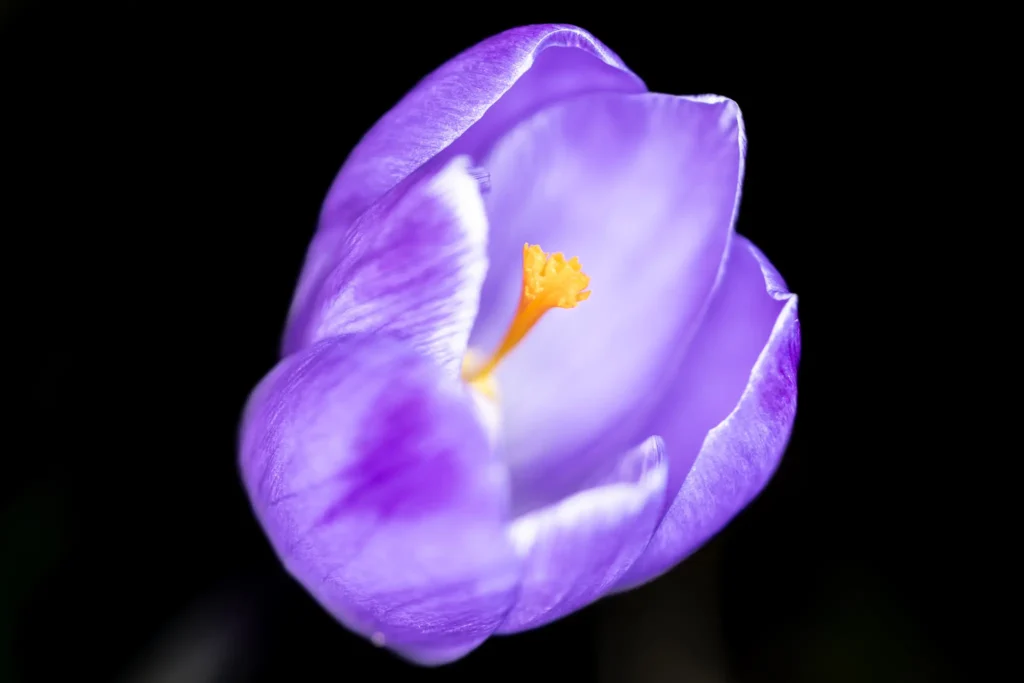
After finishing with the ladybird I returned to the crocuses, this time looking for a more abstract interpretation. I rotated the camera into a horizontal orientation and moved slightly behind the flower so that the petals swept across the frame in a broad curve. By reducing the ring light’s power and relying more on the ambient light, I allowed the side facing the camera to be delicately lit while the background fell into near‑black. A slightly wider aperture helped the rear petals melt away into a soft wash of purple, leaving the bright stigma as the sharp focal point. Because the ring light was still active, it subtly filled any deep shadows in the interior of the flower, maintaining colour and texture there without revealing itself as a distinct light source. This illustrates how you can modulate the contribution of a ring light from dominant to almost invisible simply by changing its output and your exposure balance.
Daffodil macro in full sun
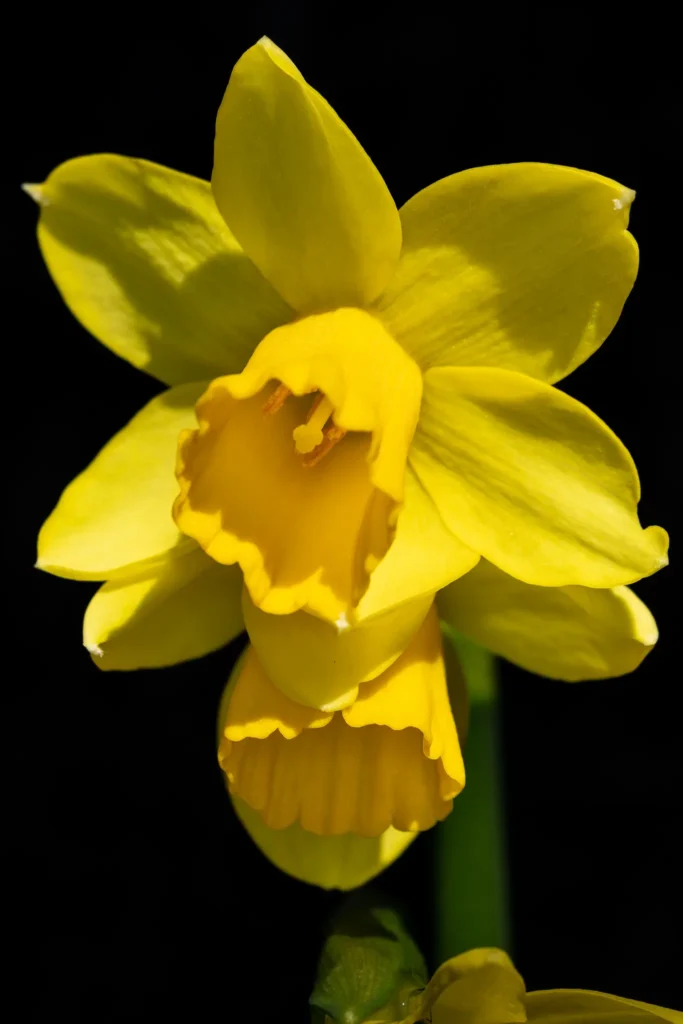
The last subject of the afternoon was a classic yellow daffodil, fully open and facing the sun. Daffodils can be tricky under direct light because their petals are both bright and semi‑translucent. I positioned myself so that the flower was side‑lit by the sun while the background remained in shade, then used the ring light as a subtle front fill to open up the shadows in the trumpet and inner petals. This prevented the centre from becoming a dark hole while still preserving the sculpted shadows created by the ambient light. A touch of negative exposure compensation kept the yellows from clipping and allowed the gradation of tone to remain visible. When you shoot similar flowers, think of the ring light as a painter would think of a reflector: it should reveal form, not erase it.
When to use focus stacking for macro
Although I did not use focus stacking during this session, it is worth touching on how stacking fits into a macro workflow like this. On calm days, when flowers and leaves are not swaying, you can lock the camera on a tripod, switch to manual focus and capture a sequence of frames with focus gradually shifted from front to back. Software such as Helicon Focus, Zerene Stacker or Photoshop can then combine these images into a single file that appears sharp throughout, overcoming the inherent shallow depth of field at high magnifications. The challenge in a garden setting is that even light breezes or shifts in flower position introduce misalignment between frames, which leads to artefacts in the final stack. With 12mph winds on this particular February day, even the ring light could not freeze that movement over the multiple exposures stacking requires, so I embraced the selective focus look and concentrated on placing that narrow band of sharpness exactly where it mattered most.
Macro photography tips for your own garden
If you want to replicate this kind of shoot in your own garden, you do not need a complex or expensive lighting rig. A continuous LED ring light combined with natural daylight provides a flexible, portable solution for revealing fine detail in flowers and insects while keeping your camera settings in an efficient working range. Start by setting your exposure for the ambient scene so that highlights in petals and leaves are safe, then gradually increase the ring light output until shadows open up and small structures—stamens, leaf hairs, water droplets—become clearly defined without losing the sense of natural light. Pay attention to the wind and do not hesitate to raise your shutter speed; the continuous light will help compensate. Above all, move slowly and look closely. On the first sunny day after a long winter, there is a particular pleasure in discovering just how much beauty is hiding in the smallest corners of a back garden.